

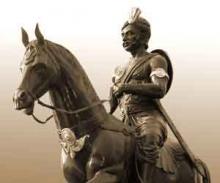
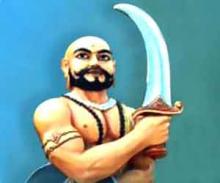

Kalinga is known to be a powerful kingdom as early as the time of the Kurukshetra battle. Srutayudha, the king of the Kalinga joined the camp of the Kourava in the battle and was killed in the battle by Bhimasena with his two heroic sons: Bhanumana and Ketumana. After the Mahabharata War a new Kshetriya dynasty ruled over Kalinga and it is known from the Buddhist work ‘Mahagovinda Suttanta’ that the glory and power of Kalinga was restored within a short period. According to the Puranas 32 Kshetriya kings ruled over Kalinga after the Mahabharata War up to the time of Mahapadmananda who ascended the throne of Magadha in 362 B. C.
The National Safety Aptitude Test (NSAT) is an online examination conducted by NSC to assess candidates’ comprehensive understanding of safety science, safety laws, risk management, safety engineering/management, leadership abilities, and general aptitude. The NSAT score, valid for two years, reflects the candidate’s performance in the occupational safety, health & environment field.
The National Safety Aptitude Test (NSAT) is an online examination conducted by NSC to assess candidates’ comprehensive understanding of safety science, safety laws, risk management, safety engineering/management, leadership abilities, and general aptitude. The NSAT score, valid for two years, reflects the candidate’s performance in the occupational safety, health & environment field.
Neither Chandragupta Maurya nor his son Vindusara tried to bring back Kalinga to the Magadha empire. It was Asoka, the son of Vindusara who invaded Kalinga in 261 B.C. and succeeded in occupying Kalinga. The Kalinga War was of colossal nature in which as many as 1,00,000 were killed and 1,50,000 were taken captives while as many as that number died as an aftermath of the war. Asoka was deeply moved by the terrible bloodshed caused by this war and was converted to Buddhism .
The hilly land lying to the west of Kalinga was known as the Atavika territory, the fighting forces of which were utilized by Kalinga during the war. Asoka annexed the coastal region of Kalinga to his empire and gave up the idea of further conquest. He tried to conciliate the unconquered Atavika people and desired to conquer their heart by love. That was the principle of Dharmavijaya and was followed by Asoka after the Kalinga War.
Kalinga became one of the administrative provisions in the empire of Magadha with headquarters of a Kumara (Viceroy) located at Tosali. The second headquarters was at Samapa where a high executive officer called Rajavachanika was stationed. Tosali was also the headquarters of the highest judiciary authority of the province.
Asoka aimed at a benevolent administration with a well organized bureaucracy and vigorously worked for the consolidation of the Maurya rule in the newly conquered province. Buddhism spared over Kalinga under his patronage and became the State religion while the art of stone masonry developed to a great extent. Edicts were engraved on the Dhauli and Jaugada rocks to inculcate his administration and religious principles to the people. Asoka died in 232 B.C. and the Maurya empire lasted up to 185 B.C.